Kelley's Sewage Cleanup
Little Sioux, IA · 51545 Basements · Bathrooms · Crawl Spaces · Businesses

Category 3 Water Cleanup in Little Sioux, IA Near Me

Category 3 is the grossly contaminated water class, sewage included. Local crews follow stricter tear-out and disinfection steps.

Sewage Backup Cleanup
Local Cleanup Crews
Category 3 Procedures
Homes and Businesses

Restoration crews sort water damage into three categories by contamination. Category 1 is clean supply water. Category 2 carries some contamination, like washing machine discharge. Category 3 is the grossly contaminated class: sewage, toilet water with waste in it, and water that has sat long enough to turn. If your water falls into that last group in Little Sioux, IA, we connect you with a local crew that follows Category 3 protocols.

Why the category changes the job

The category decides what gets thrown out. Under the IICRC S500 guideline, porous materials exposed to Category 3 water, carpet pad, drywall, insulation and upholstery, are generally removed rather than cleaned. With clean water, the same carpet might be dried in place. That is the big difference, and it is why the crew identifies the source first.

Water can also change category. A clean supply line leak that sits in a warm basement for a few days can degrade toward Category 3, which is one reason to call early instead of waiting. Crews also look at what the water picked up on its way: if it ran across a garage floor or through a wall cavity full of old insulation, they may treat it at a higher category than the source alone suggests.

Category 3 protocol in plain terms

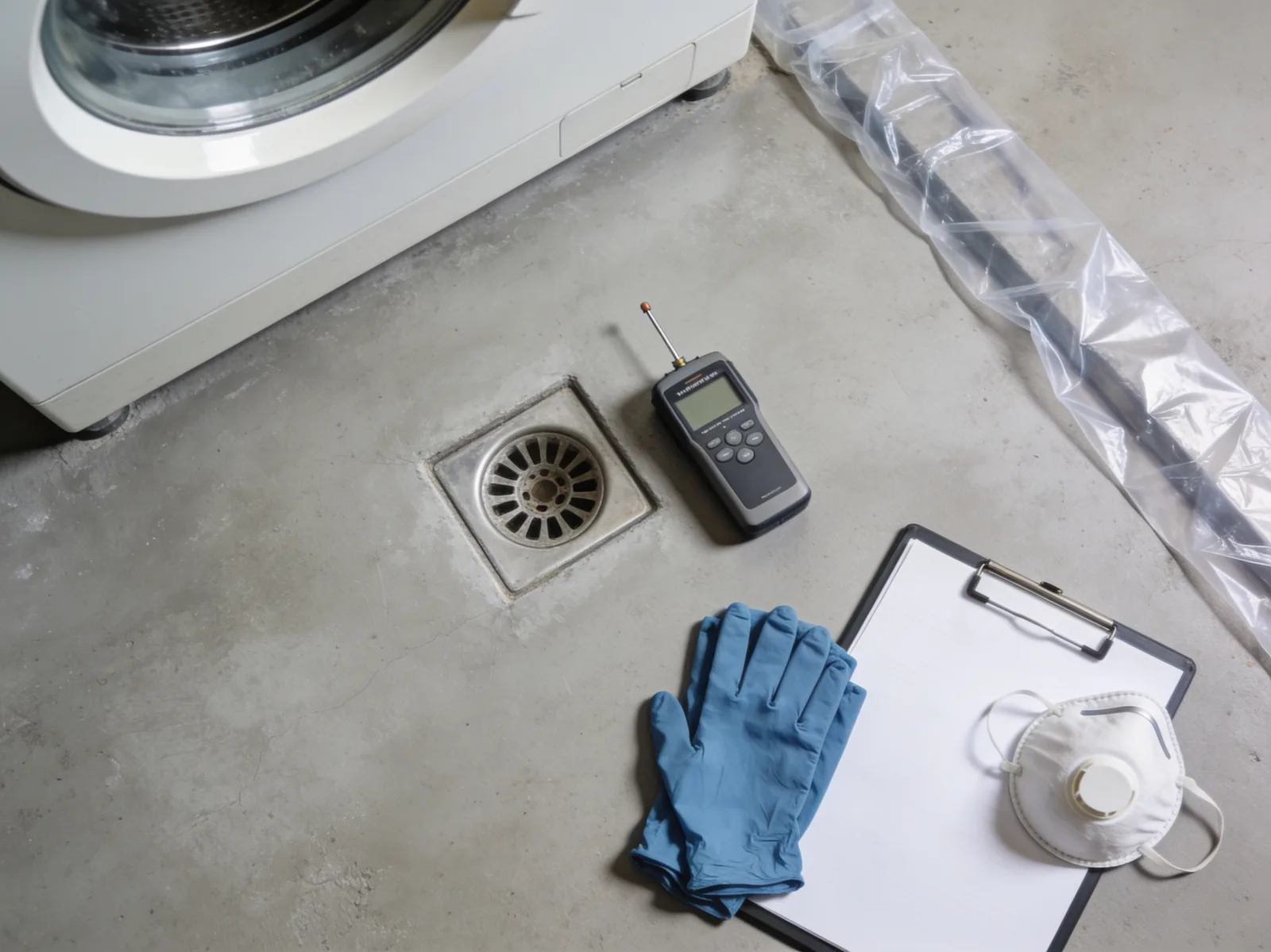
  • Crew wears gloves, boots, eye protection and respirators
  • Affected area separated from the rest of the house with plastic sheeting where needed
  • Standing water extracted and solids bagged
  • Porous materials removed below a set cut line
  • Remaining surfaces cleaned, then treated with disinfectant and left for the listed contact time
  • Structure dried with air movers and dehumidifiers and checked with meters

For the disinfection step on its own, see sewage sanitization.

Common Category 3 sources in homes

Most Category 3 calls come from inside the plumbing: a main line backup through a floor drain, a toilet overflow where the bowl held waste, or a septic system pushing back into the house. Our pages on toilet overflows and septic backups walk through those cases. The cause of a plumbing backup may need a plumber, and the cleanup crew can point out what they saw.

What affects cost

Category 3 work costs more per square foot than clean water drying, mostly because of tear-out, disposal, protective gear, containment and disinfection time. The total depends on area, depth, how long the water sat and what materials are in the room. A bare concrete utility room is a very different job from a carpeted family room with built-in shelving.

Keep everyone, pets included, out of the affected space. Call (217) 404-1483 and we will connect you with a crew that handles Category 3 water cleanup in Little Sioux, IA.
How cleanup works

Four steps to a clean, dry space in Little Sioux, IA

01

Stop the water

Shut off every fixture, keep kids and pets out, and take photos from a dry spot. Then call and tell us where the sewage is.

02

Get matched with a crew

We connect you with a local sewage cleanup crew covering Little Sioux, IA and you go over the scope, timing and price with them.

03

Extract and remove

The crew pumps out the sewage, bags solids and cuts out carpet, pad and drywall that soaked it up.

04

Disinfect and dry

Hard surfaces get cleaned and disinfected, then air movers and dehumidifiers run until moisture readings show dry.

Coverage

Sewage Cleanup Across Little Sioux, IA

Sewage backup cleanup across the neighborhoods and ZIP codes around Little Sioux, IA.

ZIP codes we serve

51545
Category 3 Water Cleanup in Little Sioux, IA

Sewage cleanup FAQs

Frequently asked questions about sewage cleanup

Questions we hear most about Category 3 Water Cleanup in Little Sioux, IA.

Talk to a real person
Can I clean up a sewage backup myself?
<p>A small spill on tile from a clogged toilet, caught right away, is something many people handle with gloves, detergent and a disinfectant. Anything bigger is a different story. Sewage that soaked into carpet, drywall or subfloor has to be removed, not just wiped, and the structure needs drying with meters to confirm it. Household bleach on a dirty floor doesn't do the job. If it spread past one room or reached finished materials, a crew that does <a href="/services/sewage-backup-cleanup">sewage backup cleanup</a> is the safer route.</p>
How long does sewage cleanup take?
<p>Extraction and tear-out usually happen in the first day or so. Drying is the longer part. Most structures need three to five days with air movers and dehumidifiers running, sometimes more in a humid basement or with thick materials like hardwood subfloor. The crew should take moisture readings each visit and leave the equipment until materials reach dry targets. Rebuilding comes after that and depends on the contractor. A small toilet overflow on tile can be done much faster than a finished basement.</p>
Is it safe to stay in the house after a sewage backup?
<p>It depends on how much of the house is affected. Many families stay home when the backup is limited to a basement or one bathroom that can be closed off. Keep children, pets and anyone vulnerable out of the affected area, and don't walk through it without boots and gloves. If sewage reached living areas, the HVAC returns or the only bathroom, staying elsewhere for a few days may make more sense. The crew can tell you which areas are off limits while they work.</p>
How do I get rid of a sewer smell after a backup has been cleaned?
<p>A lingering smell usually means something is still wet or contaminated: carpet pad left in place, drywall that wicked higher than anyone checked, or damp framing. Moisture readings help find it. A dried-out floor drain trap can also let sewer gas in, and pouring water down the drain often fixes that. Deodorizing only works after the source is gone. Our page on <a href="/services/sewage-odor-removal">sewage odor removal</a> explains how crews track the smell down.</p>
Will a sewage backup cause mold?
<p>It can, if materials stay wet. Mold needs moisture and something to feed on, and wet drywall paper, wood and carpet backing provide both. The risk climbs the longer the structure stays damp, which is why cleanup includes several days of drying with air movers and dehumidifiers and readings to confirm materials are dry. Closing up walls over wet studs is a common way mold problems start. Getting the water out quickly and drying properly is the main defense.</p>

Book sewage cleanup

Sewage Backup in Little Sioux, IA? Call now.

Tell us where the sewage is and we connect you with a cleanup crew covering Little Sioux, IA. Scope, timing and price are gone over on the call. (217) 404-1483.

Call (217) 404-1483 Services